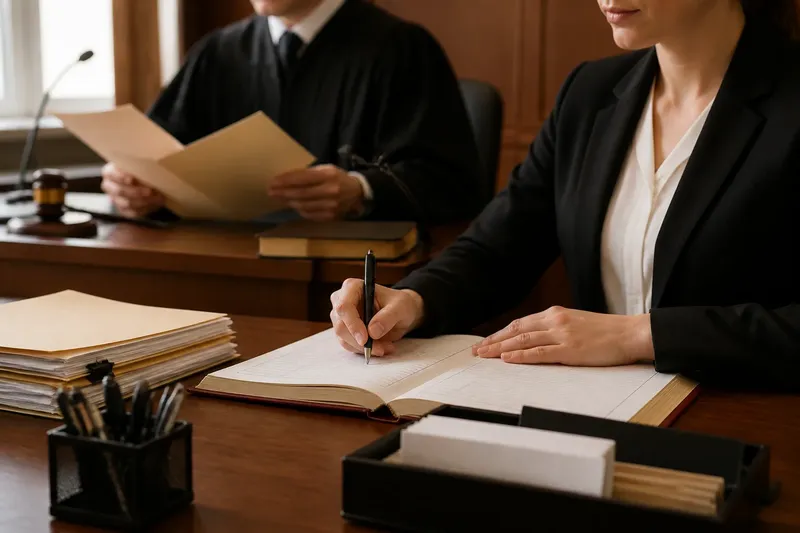
The Appeal Is Not Simply a Second Trial
An appeal is not simply a second trial: learn how the record, legal arguments, and standards of review shape what an appellate court can decide.
A witness leaves the stand, the lawyers gather their papers, and the courtroom empties. Later, someone hears that the losing side is appealing and imagines the same scene beginning again, with the same evidence and another chance to persuade a judge. An appeal is not simply a second trial. It is generally a review of what happened in the first proceeding, with a different purpose and a different view of the record.
That distinction helps explain why an appellate decision does not simply replace a trial judge’s judgment with a fresh one. An appeal asks whether the lower court made an error that matters under the rules governing review. It does not ordinarily invite the parties to rebuild their dispute from scratch.
Appeal record
A trial creates a record: filings, admitted exhibits, transcripts or other accounts of proceedings, and the decisions the judge made along the way. An appellate court generally works from that record rather than hearing witnesses anew. It offers a bounded account of what occurred and what the parties presented to the trial court.
That boundary can shape an appeal before the parties argue about the legal issue. Material that was not properly presented below may not become usable simply because a party now wishes it had been part of the case. An appellate court is not typically a place to introduce a new witness, submit a revised exhibit, or repair an evidentiary omission through fresh testimony.
Say you are reading about an invented dispute over a damaged delivery. The parties presented photographs, testimony, and a delivery receipt at trial; the judge admitted some items and excluded another. One side appeals that exclusion. The court reviews the record of the ruling and the arguments made about it, rather than calling the driver back to tell the story again.
The record is not merely a stack of documents. It is the account the appellate court is authorized to review.
Questions on appeal
An appeal usually turns on questions framed by the parties’ written arguments. They might concern how a legal rule was interpreted, whether a procedure was fair, or whether a ruling should stand under the applicable standard of review. The judges examine relevant parts of the record and consider each side’s explanation of why the lower court’s action was or was not legally sound.
This differs from asking which witness seemed more believable after hearing everything again. Trial courts are generally positioned to observe witnesses and manage a proceeding as it unfolds. Appellate courts usually do not repeat that work; they review the record with attention to the kind of decision being challenged.
The phrase “standard of review” describes how an appellate court approaches a particular kind of lower-court decision. The standard varies by issue. A legal question may receive more independent examination, while a decision entrusted to the trial judge’s judgment may be reviewed more deferentially. The courts have different roles; one does not simply redo the other’s work.
When reading about an appeal, ask: What ruling is being challenged, and what test does the appellate court use to review it?
Briefs and arguments
An appeal often proceeds through written briefs. A brief identifies the issues, points to relevant parts of the record, and explains the law the party believes should govern. The opposing party can answer, and the appellant may have an opportunity to reply, depending on the court’s rules.
These documents are arguments about the existing proceeding, not fresh trial narratives. A brief may describe the underlying events, but its central task is to connect the challenged ruling to the record and to legal reasoning.
Some appeals also include oral argument. Lawyers answer judges’ questions and clarify points in their briefs. Oral argument is not usually a second evidentiary hearing: witnesses do not take the stand to give new accounts, and the court does not ordinarily invite a general retelling of the dispute.
In the invented delivery dispute, suppose the appeal concerns whether a legal rule allowed the judge to exclude the receipt. The judges might ask how that rule applies to the ruling shown in the record. The lawyers can clarify their arguments, but the hearing would not ordinarily become a new presentation of the driver’s testimony.
How review works
Not every claimed mistake changes the result. An appellate court may consider whether the challenged action was wrong, whether the issue was preserved for review, and whether any error affected the outcome in a legally meaningful way. These are distinct questions: identifying a questionable ruling does not by itself establish a basis for altering the judgment.
Preservation refers, broadly, to whether a party raised an issue in the lower court in a way that allowed that court to address it. Rules vary, and exceptions may exist, but an appeal is not generally a chance to save every objection for later. The trial court usually needs a fair opportunity to rule while the case is underway.
If an appellate court identifies an error, the remedy depends on the issue and the governing law. It may leave the result in place, change part of it, send the case back for further proceedings, or take another action available to it. A return to the lower court does not necessarily mean a complete retrial; the instructions may concern a specific issue or procedure.
When a report says an appellate court “reversed” a decision, read on to see whether it ordered a new proceeding, altered part of the judgment, or sent the matter back for a narrower task.
What readers ask?
Can new evidence be introduced on appeal?
Usually, an appeal is decided from the record made in the lower court rather than from new evidence. Special procedures may exist in particular settings, but they are not the ordinary way to retry disputed facts.
Does an appeal automatically pause a decision?
Not necessarily. Whether a decision is paused can depend on the type of case, court rules, and any order entered while the appeal is pending. The word “appeal” alone does not reveal whether the earlier ruling remains in effect.
Why don’t appellate judges decide who seemed truthful?
They generally review the recorded proceedings rather than observing witnesses firsthand. Their work centers on legal and procedural questions, while credibility findings are ordinarily made in the trial court.
Does winning an appeal end the dispute?
Sometimes an appellate ruling resolves the matter, but it may instead return part of the case to the lower court. The decision’s wording and any remaining proceedings determine what happens next.
Reading the ruling
Appellate decisions often use terms such as affirmed, reversed, vacated, or remanded. In broad usage, affirming leaves the challenged decision standing; reversing changes it; vacating sets it aside; and remanding sends the matter back to a lower court. The precise effect depends on the decision and the rules that apply, so read the disposition alongside the court’s explanation.
A ruling may address one issue while leaving others untouched. An appellate court might reject a challenge to one evidentiary decision but send another question back for further proceedings. A headline saying a party “won the appeal” can flatten that distinction. The written decision shows what changed and what did not.
To read the result carefully, identify the issue the court reviewed, note the standard it applied, and check the disposition and any instructions on remand. Together, those details show whether the original result stands, changes, or requires further work below.
Different court roles
The appeal’s limits reflect its purpose. Trial proceedings establish a record and resolve disputed matters in the first instance; appellate review examines whether the resulting decisions should stand under applicable law. Treating an appeal as a second trial obscures both jobs and can make a narrow legal ruling sound like a fresh verdict on every fact.
So when you encounter an appeal in a court report, look for the challenged ruling rather than expecting a replay of the entire dispute. The distinction is simple but useful: a trial hears the case; an appeal reviews the work the trial court did with it.