Why Courtrooms Have Clerks as Well as Judges
Why courtrooms have clerks as well as judges: understand how clerks organize proceedings, how judges make rulings, and which role handles each kind of task.
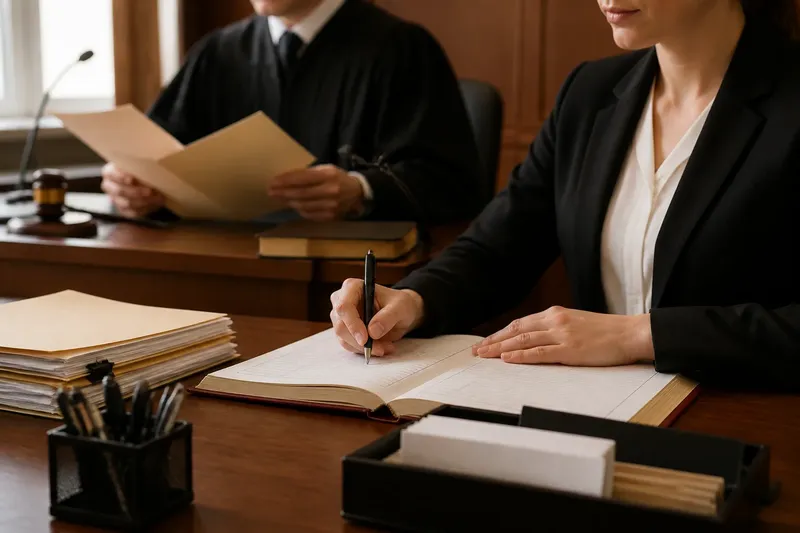
As a hearing begins, a clerk may call the case while the judge reviews the file. Both actions help move the proceeding forward, but they carry different authority. Why courtrooms have clerks as well as judges comes down to a distinction between administering the process and deciding matters within it.
Different responsibilities
A courtroom must do more than hear arguments. It must identify the case, keep track of documents and exhibits, preserve a record, and make the sequence of events clear. Clerks help administer these processes. Judges preside and make the decisions assigned to them.
The difference is not simply paperwork versus important work. Accurate administration matters because an unclear record can make it harder to understand what happened. The distinction is about authority: carrying out a procedural task does not make a clerk the decision-maker.
Clerk titles and duties vary. A courtroom clerk may work directly in hearings, while other court clerks handle filings, records, or administrative matters outside the courtroom. Local rules and the type of court shape the division of work.
Clerks maintain the record
Depending on local practice, a courtroom clerk may call cases, note appearances, administer oaths, identify exhibits, or process paperwork after a judge rules. Clerks may also help keep files and schedules in order. These tasks make it easier to follow the proceeding and understand what the court recorded.
Imagine a witness brings a document to a hearing. The clerk identifies the item so participants can refer to it, while the judge decides whether it may be admitted as evidence. Identifying the document does not settle whether the court can consider it.
When you attend a hearing, listen for the clerk’s announcements; they can indicate which case or stage of the proceeding is underway.
Judges make rulings
A judge may interpret and apply law, rule on objections, manage arguments, and issue decisions or orders. In a jury trial, the judge generally decides legal questions while the jury decides disputed facts. In a proceeding without a jury, the judge may decide both legal questions and facts, depending on the matter.
The judge also controls the proceeding and is responsible for making rulings within the judge’s authority. A clerk may prepare paperwork that records a ruling, but the judge’s decision is what gives the ruling its authority. The record and the decision are connected, not interchangeable.
How do the roles differ?
Can a courtroom clerk decide a case?
A clerk does not decide a case’s merits or resolve a disputed legal issue. The clerk may carry out assigned administrative work, while decisions entrusted to a judge remain judicial acts.
Why does the clerk speak during a hearing?
A clerk may call a case, identify participants, administer an oath, or help identify an exhibit, depending on local practice. Speaking in court is part of performing a function; it does not itself mean the clerk is making a ruling.
Do all courtroom clerks have the same duties?
No. Courts assign administrative tasks differently, and some work may be handled by other staff or electronic systems. The clerk’s role depends on the court and the proceeding.
Who can answer a legal question?
Court staff may provide neutral information about routine processes, such as filing procedures or schedules, but generally cannot advise someone what position to take in a case. For case-specific legal guidance, consult a qualified lawyer.
Choosing whom to ask
For a member of the public, the useful distinction is the kind of question. Court staff may be able to direct you to information about a hearing location, a filing process, or a public record. A judge makes rulings within a proceeding; a clerk cannot turn an informal question into a decision.
Say you are attending a hearing and cannot tell whether the case has been called. Asking the clerk about the schedule concerns court administration, so the clerk may be able to clarify it. Asking which side should win asks for a judgment about the dispute, not help with the court’s routine operations.
If you need the judge to consider an argument, it must be raised through the applicable court process, which gives the other side an opportunity to respond. For case-specific advice about how to proceed, speak with a qualified legal professional.
Order and authority
Clerks help proceedings stay organized and keep the record legible; judges exercise judicial authority and decide matters assigned to them. The roles work alongside each other without becoming interchangeable.
As you watch a hearing, notice which actions organize the schedule or record and which actions settle a question. That distinction helps explain why a courtroom needs both roles—and why the clerical task of recording a decision is not the same as making one.